Industrial Abrasive Selection Guide: FEPA Grit Sizing, Knoop Hardness & Mineral Matching
Selecting an industrial abrasive medium requires matching three quantifiable mineral properties to your target substrate: Knoop microhardness (HK100), single-grain fracture toughness (friability), and chemical inertness at the contact interface. When an abrasive grain is softer than 1.25 times the workpiece Vickers hardness, cutting efficiency drops by more than 60% and thermal rubbing dominates. Conversely, using an overly aggressive synthetic carbide on thin-walled aluminum or composite housings causes permanent dimensional gouging and embedded surface contamination.
This engineering guide establishes a quantitative selection framework across 11 core synthetic, natural, metallic, and biodegradable abrasive minerals smelted and classified at our 35,000 m² Gongyi manufacturing plant. Whether you are formulating vitrified grinding wheels, running 380 MPa CNC waterjet cutting tables, preparing ship hulls to ISO 8501-1 Sa 2.5, or de-coking aerospace turbine blades, use the empirical test data below to specify the exact mineral grade and mesh distribution.
- Hard-Alloy & Ferrous Grinding: Choose Brown Fused Alumina (BFA, Al2O3 ≥ 95.5%, 2,050 HK) for high-pressure carbon steel snagging and blasting, or White Fused Alumina (WFA, Al2O3 ≥ 99.5%, Fe2O3 ≤ 0.05%) for cool-cutting heat-sensitive stainless steels and medical alloys.
- Non-Ferrous, Carbide & Ceramic Machining: Specify Black Silicon Carbide (SiC ≥ 98.5%, 2,800 HK, Mohs 9.5) for cast iron, stone, glass, silicon wafer wire-sawing, and non-ferrous alloys where alumina grains dull rapidly.
- CNC Waterjet & Outdoor Structural Blasting: Use triple-washed 80 Mesh Almandine Rock Garnet (SG 4.10 g/cm³, chlorides ≤ 15 ppm) to balance cutting speed with focusing-tube longevity.
- Non-Destructive Carbon & Paint Stripping: Use Crushed Walnut Shell (Mohs 3.5) or Corn Cob Granules (Mohs 2.5) to strip coatings and automotive intake carbon with zero substrate metal removal.
- Grit Standard Verification: Always specify FEPA F-series (FEPA 42-1:2006) for bonded wheels and blasting media, and FEPA P-series (FEPA 43-1) for flexible coated belts.
1. How Knoop Microhardness and Crystal Friability Govern Cutting Mechanics
The traditional 1-to-10 Mohs scratch scale is too coarse for industrial abrasive engineering because almost all synthetic abrasives cluster between Mohs 9.0 and 9.5. Process engineers evaluate abrasive cutting capacity using Knoop indentation microhardness (HK100, measured in kg/mm²) alongside ball-mill friability testing (ASTM C133 / GB/T 2478).
As illustrated in the Knoop microhardness comparison below, Black Silicon Carbide reaches 2,800 HK, making it 36% harder than Brown Fused Alumina (2,050 HK) and more than twice as hard as natural Almandine Garnet (1,350 HK).
However, microhardness alone does not determine material removal rate. Friability defines how readily an abrasive crystal fractures under mechanical stress to expose fresh, self-sharpening cutting edges:
- Low-Friability (High-Toughness) Grains: Tilting-furnace Brown Fused Alumina (TiO2 2.2%–3.0%) and Black Fused Alumina (Al2O3 75%–85%) feature a tough crystal lattice that resists premature shattering under heavy impact pressures (0.6–0.8 MPa).
- Medium-to-High Friability (Self-Sharpening) Grains: White Fused Alumina (Na2O ≤ 0.25%) contains microscopic sodium beta-alumina cleavage planes. Under grinding forces, dull grain tips micro-fracture before friction heat builds up, preventing metallurgical burn on hardened tool steels (HRC 60+).
- Extreme-Sharpness Cleavage Grains: Hexagonal α-SiC fractures into razor-sharp, acicular slivers ideal for shearing brittle materials (optical glass, granite, chilled cast iron, and sintered ceramics).
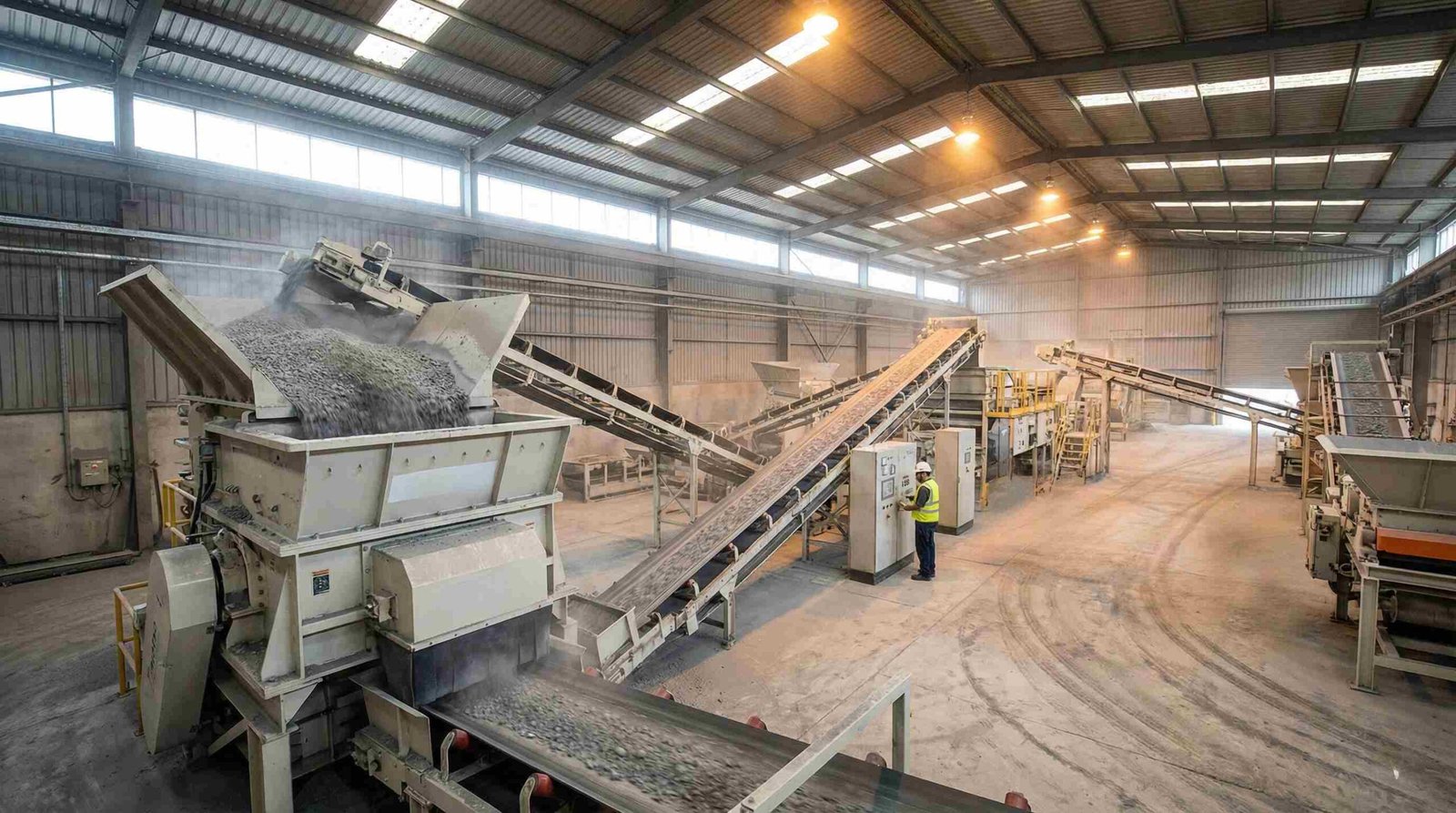
How Crushing Equipment Alters Bulk Density by 14%: In our Gongyi plant trials on FEPA F36 Brown Fused Alumina, conventional jaw-and-roll crushing produced flaky grains with a Loose Packed Density (LPD) of 1.64 g/cm³ and a 4-cycle blast breakdown rate. Switching to Barmac vertical-shaft impact (VSI) autogenous rock-on-rock shaping increased LPD to 1.87 g/cm³ and extended reusable blast cycles to 8 full passes by eliminating internal micro-fissures.
2. Master Engineering Comparison Matrix: 11 Industrial Abrasive & Refractory Minerals
Use the cross-reference datasheet below to compare chemical purity, bulk density, hardness, and primary industrial applications across all 11 mineral lines produced at Gongyi Fengtai. Click any mineral name to open its full XRF and sieve-distribution datasheet.
| Mineral Grade | Primary Chemistry | Mohs / Knoop Hardness | Bulk Density (g/cm³) | Standard Gradings | Optimal Industrial Applications |
|---|---|---|---|---|---|
| Brown Fused Alumina (BFA) | Al2O3 ≥ 95.5% TiO2 ≤ 3.0% |
9.0 Mohs 2,050 HK |
1.75 – 1.95 | FEPA F12–F1200 P12–P220 0-1-3-5mm |
Resinoid/vitrified grinding wheels, carbon steel sandblasting, ladle castables |
| White Fused Alumina (WFA) | Al2O3 ≥ 99.5% Fe2O3 ≤ 0.05% |
9.0 Mohs 2,100 HK |
1.70 – 1.90 | FEPA F12–F1200 JIS #240–#4000 0-1-3-5mm |
Precision tool-steel grinding, iron-free stainless/medical blasting, kiln furniture |
| Black Fused Alumina (BFA-L) | Al2O3 75%–85% Fe2O3 8%–12% |
8.5–9.0 Mohs 1,950 HK |
1.72 – 1.90 | FEPA F16–F220 1–3mm / 3–5mm |
Stainless cookware buffing, coated emery cloth, epoxy anti-skid bridge flooring |
| Calcined α-Alumina Powder | Al2O3 ≥ 99.6% α-phase ≥ 95% |
9.0 Mohs 2,080 HK |
0.95 – 1.35 | 325–6000 Mesh D50 1.2–45 μm |
Technical ceramic sintering, LCC refractory matrix fines, semiconductor lapping |
| Black Silicon Carbide (SiC) | SiC ≥ 98.5% Free C ≤ 0.20% |
9.5 Mohs 2,800 HK |
1.45 – 1.65 | FEPA F12–F1200 JIS Micro 0-1-3-5-10mm |
Stone/glass/ceramic grinding, wire sawing, SiC kiln shelves, steel deoxidation |
| Almandine Garnet Sand | Fe3Al2(SiO4)3 Cl– ≤ 15 ppm |
7.5–8.0 Mohs 1,350 HK |
2.30 – 2.45 (SG 4.10) |
60# / 80# / 120# 30/60# / 20/40# |
CNC high-pressure waterjet cutting, shipyard & offshore low-dust blasting |
| Rotary Kiln Calcined Bauxite | Al2O3 80%/85%/88% Mullite + Corundum |
8.0–8.5 Mohs 1,650 HK |
2.85 – 3.15 (Grain BD) |
0-1-3-5-8mm 1–3mm HFST 200 / 325 Mesh |
High-alumina refractory bricks/castables, HFST anti-skid highway surfacing |
| Counterweight Iron Sand | Total Fe 88%–95% Metallic / Ferro |
6.5–7.5 Mohs HRC 45–55 |
4.20 – 5.20 (SG 6.8–7.2) |
0.5–2.5mm 1–3mm / 2–5mm |
Excavator/crane counterweights, radiation shielding concrete, marine ballast |
| Reduced Sponge Iron Powder | Fe ≥ 98.5% H2 Loss ≤ 0.25% |
Sponge Porous High Green Str. |
2.40 – 2.80 (Apparent) |
-80 / -100 / -200 -300 Mesh |
Sintered PM automotive gears, brake friction pads, E7018 welding electrodes |
| Crushed Walnut Shell Media | 100% Juglans regia 0% Free Silica |
3.5 Mohs 280 HK |
0.68 – 0.82 | 6/10, 12/20, 16/30 20/40, 30/60# |
BMW/VW intake carbon blasting, turbine cleaning, wheel pore-forming burnout |
| Corn Cob Granules | 100% Woody Ring 400% Absorption |
2.5–3.0 Mohs Cellulose |
0.45 – 0.55 | 8/12, 14/20 20/30, 30/40# |
Vibratory drying of plated fasteners, brass cartridge tumbling, log-home blasting |
3. Dry Air-Blasting Economics: Recyclability vs. Breakdown Rate
In closed-loop blast rooms, cabinet blasters, and automated wheel-blast machines, media cost per square meter cleaned is governed by recycling endurance rather than per-ton purchase price. Brittle minerals that shatter on first impact generate excessive dust, overload baghouse filters, and reduce visibility at the blast nozzle.
Our Gongyi blast-cabinet endurance testing at 0.65 MPa (95 psi) against ISO 8501-1 Sa 2.5 mill-scaled steel demonstrates clear operational boundaries:
- Closed-Loop Blast Rooms (6–8 Cycles): Specify Barmac-shaped Brown Fused Alumina (F24–F60). Its TiO2-toughened crystal lattice withstands 8 full reclamation cycles before 50% of the working mix falls below the cyclone separator cutoff.
- Stainless Steel, Aluminum & Titanium Cabinets (4–5 Cycles): Specify White Fused Alumina. Although WFA breaks down faster (4 cycles), its Fe2O3 ≤ 0.05% purity eliminates any risk of embedded free iron rusting on passivated surfaces.
- Open-Air Shipyard & Tank Maintenance (1–5 Cycles): Where full media recovery is impractical, 30/60 Mesh Crushed Almandine Garnet delivers the lowest cost per square meter with <0.1% free crystalline silica (ISO 11126-10 compliant).
4. CNC Waterjet Cutting vs. Non-Destructive Soft Blasting
4.1 Selecting 60, 80, or 120 Mesh Almandine Garnet for Waterjet Tables
In ultra-high-pressure (380–600 MPa) abrasive waterjet cutting, mineral density and grain cleanliness protect your carbide mixing tube from premature erosion. According to the USGS National Minerals Information Center, almandine garnet (Fe3Al2(SiO4)3, specific gravity 4.0–4.1 g/cm³) dominates precision waterjet cutting because its sub-angular fracture edges cut fast without shattering inside the focusing nozzle.
- 80 Mesh (180–300 μm): The universal industrial standard (representing 78% of global waterjet demand) for cutting 5–50 mm stainless steel, tool steel, aluminum, and stone at optimal feed rates.
- 60 Mesh (250–425 μm): Heavy-duty cutting of thick steel plate (>50 mm) and granite slabs where maximum cutting speed outweighs kerf edge smoothness.
- 120 Mesh (106–180 μm): Fine-kerf precision cutting of thin carbon-fiber composites, laminated glass, titanium aerospace shims, and intricate architectural inlays.
4.2 Organic Soft Media for Zero-Tolerance Substrates
When cleaning carbon deposits from automotive direct-injection intake valves, stripping paint from aircraft skins, or deflashing injection-molded electronics, mineral abrasives (Mohs 7.5–9.5) will permanently scar the base metal. Switching to Crushed Walnut Shell Media (16/30 or 20/40 Mesh, Mohs 3.5) removes baked-on carbon and epoxy coatings while leaving anodized aluminum, brass, and steel surfaces 100% dimensionally intact.
5. B2B Procurement & Quality Control Checklist Before Ordering
Before issuing a purchase order for a 20′ FCL (20–26 MT) shipment of industrial abrasives or rotary kiln calcined bauxite, verify these four laboratory parameters on the supplier’s Certificate of Analysis (COA):
- XRF Chemical Assay per Batch: Require wavelength-dispersive X-ray fluorescence (XRF) verification of Al2O3, SiC, Fe2O3, Na2O, and TiO2 percentages rather than generic catalog ranges.
- Magnetic Iron Removal: For grinding wheel and ceramic applications, confirm the grain has passed through 12,000-Gauss rare-earth magnetic separators to keep free magnetic iron below 0.005%.
- Sieve Retention Curve: Verify the exact standard (FEPA F vs. FEPA P vs. JIS R6001) and check that oversize retention on the coarsest control sieve is 0.0%.
- Moisture-Proof Seaport Packaging: Specify triple-layer 25kg PE/PP bags palletized inside 1,000kg FIBC jumbo bags on ISPM-15 fumigated pallets to prevent moisture caking during oceanic transit. Download our full ISO 9001 Technical Data Sheets (TDS) to review standard tolerances.
6. Frequently Asked Engineering Questions (FAQ)
Why does White Fused Alumina cut cooler than Brown Fused Alumina in vitrified wheels?
White Fused Alumina (Al2O3 ≥ 99.5%) has higher crystal friability due to trace beta-alumina cleavage planes. As a grain dulls against hardened steel, its tip micro-fractures under lower grinding force, continually exposing sharp new edges instead of rubbing and generating friction heat.
Can I substitute Black Silicon Carbide for Brown Fused Alumina when grinding carbon steel?
No. Although Silicon Carbide (2,800 HK) is harder than Brown Fused Alumina (2,050 HK), silicon carbide reacts chemically with iron at high grinding temperatures (chemical attrition wear), causing rapid wheel wear on high-tensile steels. Use BFA or WFA for steel, and reserve SiC for cast iron, non-ferrous metals, stone, and ceramics.
What is the difference between crushed rock garnet and alluvial beach garnet for waterjets?
Crushed almandine hard-rock garnet possesses sharp, sub-angular fracture edges that cut 20% to 30% faster in CNC waterjets than rounded alluvial beach grains. At Gongyi Fengtai, our crushed rock garnet is washed six times to keep soluble chlorides below 15 ppm and dust below 0.1%.
How do I request free laboratory trial samples before booking a container load?
Click any Request Quote button on this page to open our direct factory inquiry desk. We provide free 1 kg to 5 kg production-batch samples accompanied by a signed XRF and Ro-Tap sieve Certificate of Analysis (COA), dispatched worldwide via DHL or FedEx within 48 hours.